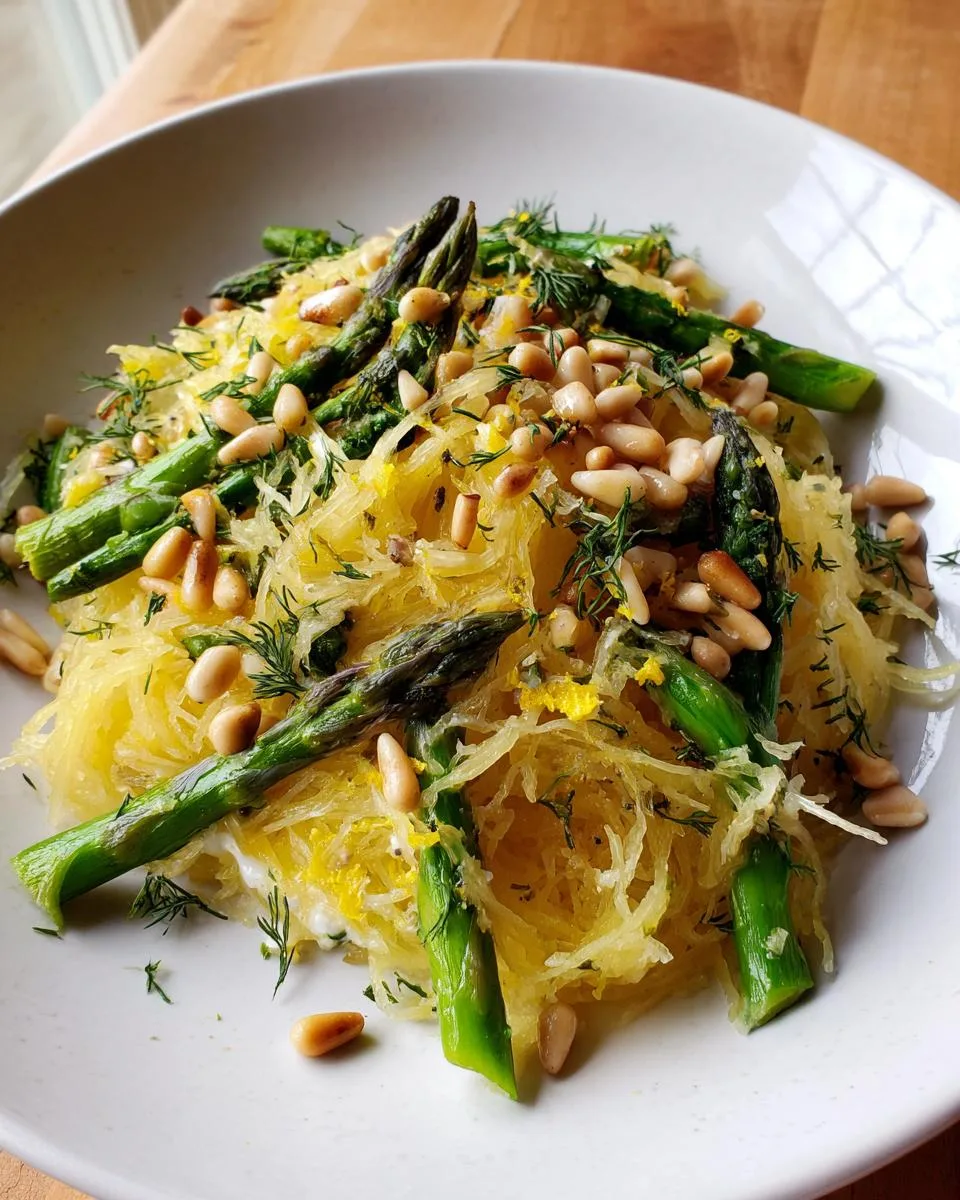
You know those recipes that just feel like springtime? That’s exactly what this spaghetti squash with asparagus, ricotta, lemon, and thyme dish is for me. I first threw it together years ago when my garden was overflowing with asparagus, and I had a lonely spaghetti squash sitting on the counter begging to be used. Little did I know it would become one of my most-requested vegetarian meals!

Table of Contents
Table of Contents
What I love about this dish – besides how darn pretty it looks on the table – is how the flavors just sing together. The sweet, nutty squash strands, those bright pops of lemon, the earthy thyme… oh, and let’s not forget that creamy ricotta bringing it all together. It’s one of those magical combinations where each ingredient gets its moment to shine.
After making this dozens of times for family dinners and potlucks, I’ve perfected the little tricks that make all the difference. Like roasting the garlic right under the squash – wait till you smell that! And toasting the pine nuts just until they’re golden (trust me, burnt nuts ruin everything). This recipe proves that with just a few quality ingredients and some simple techniques, you can create something truly special.
Whether you’re looking for a light vegetarian main or a stunning side dish, this spaghetti squash with asparagus, ricotta, lemon, and thyme never disappoints. It’s become my go-to when I want something that feels fancy but is actually dead simple to make. Just wait till you see how those squash strands twirl around your fork – pure veggie magic!
Ingredients for Spaghetti Squash With Asparagus Ricotta Lemon And Thyme
Now, let’s gather our simple but mighty ingredients! I always say the magic happens when you use fresh, quality components – no shortcuts here. Here’s exactly what you’ll need:

- 1 small spaghetti squash (about 1 1/2 pounds) – halved lengthwise and deseeded (don’t toss those seeds – roast them for a crunchy snack!)
- 1 tablespoon olive oil, divided – half for the squash, half for our asparagus
- 2 cloves garlic, smashed but not chopped – these will roast under the squash for incredible flavor
- 1 pound asparagus – woody ends snapped off and cut into 2-inch diagonal pieces (makes it look fancy!)
- 3/4 cup ricotta cheese – go for whole milk ricotta if you can; it’s creamier and worth every calorie
- 3 tablespoons freshly squeezed lemon juice – from about 1 medium lemon (please, no bottled stuff!)
- 1 teaspoon finely grated lemon zest – that bright yellow part only, none of the bitter white pith
- 1 teaspoon fresh thyme leaves – stripped from 4-5 sprigs (dried just won’t give you that same pop)
- 1/2 teaspoon kosher salt – plus maybe a pinch more to taste at the end
- 1/4 teaspoon freshly ground black pepper – freshly cracked makes all the difference
- 3 tablespoons pine nuts – lightly toasted until golden (watch them like a hawk – they burn fast!)
See? Nothing too fancy, but each ingredient plays a crucial role. I’ve made this enough times to know that skimping on the fresh herbs or using pre-grated lemon zest just doesn’t give you that same “wow” factor. Now let’s get cooking!
How to Make Spaghetti Squash With Asparagus Ricotta Lemon And Thyme
Alright, let’s turn these beautiful ingredients into something magical! I promise it’s easier than it looks – just follow these simple steps and you’ll have a showstopper dish in no time. The key is timing everything just right, so let’s break it down.
Roast the Spaghetti Squash
First things first – heat that oven to 375°F and get your baking sheet ready. Now, wrestling with spaghetti squash can be a workout, but here’s my trick: microwave it whole for 30 seconds to soften the skin slightly before cutting. Then stand it upright and carefully slice it lengthwise (watch those fingers!). Scoop out the seeds with a spoon – save them to roast later if you want a crunchy snack.
Brush the cut sides with about half of your olive oil – just enough to make them glisten. Place them cut-side down on one half of your baking sheet. Pop them in the oven and set your timer for 35 minutes. The squash is ready when you can easily pierce the skin with a fork.
Prepare and Roast the Asparagus
While the squash is roasting, let’s prep our asparagus. Simply snap off the woody ends – they’ll naturally break where they should. Cut the stalks on a diagonal into 2-inch pieces (makes it look chef-y!). When the squash has about 10 minutes left, quickly toss the asparagus with the remaining olive oil and scatter them on the other half of the baking sheet. Here’s my favorite part – tuck those smashed garlic cloves right under the squash halves. The squash will infuse them with flavor as they roast together.
Mix the Ricotta and Lemon
Time to make our creamy sauce base! In a big bowl, combine the ricotta, lemon juice, lemon zest, thyme leaves, salt, and pepper. Give it a good stir until it’s smooth and dreamy. The lemon zest is key here – it adds that bright, sunny flavor that makes this dish sing. Taste it and adjust the seasoning if needed – sometimes I add an extra pinch of salt or squeeze of lemon.
Assemble the Dish
When everything’s out of the oven, carefully fish out those garlic cloves from under the squash – they’ll be soft and fragrant. Mash them into the ricotta mixture (this is flavor gold!). Add the roasted asparagus and give it all a gentle mix. Now for the fun part – use a fork to scrape the squash flesh into strands right into the bowl. Toss everything together gently – you want those beautiful strands to stay intact. Serve it up pretty on a platter or individual plates, then scatter those toasted pine nuts on top for the perfect crunch. Voilà – spring on a plate!
Print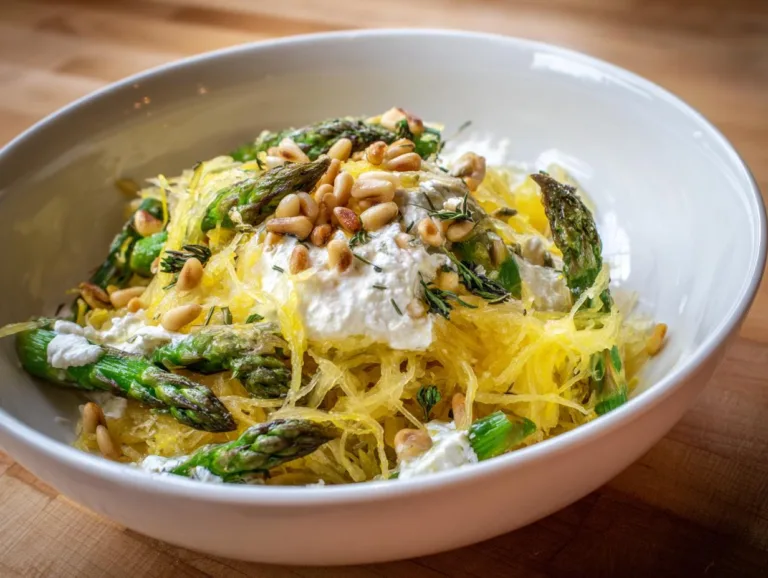
Yummy Spaghetti Squash With Asparagus Ricotta Lemon & Thyme
A light and flavorful dish featuring roasted spaghetti squash, asparagus, ricotta cheese, and fresh thyme. Perfect for a healthy meal.
- Total Time: 60 minutes
- Yield: 4 servings 1x
Ingredients
- 1 small spaghetti squash (about 1 1/2 pounds)
- 1 tablespoon olive oil, divided
- 2 cloves garlic, smashed
- 1 pound asparagus
- 3/4 cup ricotta cheese
- 3 tablespoons freshly squeezed lemon juice (from about 1 medium lemon)
- 1 teaspoon finely grated lemon zest
- 1 teaspoon fresh thyme leaves (from 4 to 5 sprigs)
- 1/2 teaspoon kosher salt
- 1/4 teaspoon freshly ground black pepper
- 3 tablespoons pine nuts, toasted
Instructions
- Arrange a rack in the middle of the oven and heat to 375°F.
- Cut the squash in half lengthwise and scrape out the seeds. Brush the cut sides with 1/2 tablespoon of the oil. Place cut-side down on one half of a rimmed baking sheet. Roast for 35 minutes.
- Trim the woody ends of the asparagus and cut the stalks on a diagonal into 2-inch pieces.
- Remove the baking sheet with the squash, add the asparagus to the other side, and toss with the remaining 1/2 tablespoon oil. Place a garlic clove beneath each squash half. Return the baking sheet to the oven and roast for about 10 minutes.
- Mix ricotta, lemon juice, zest, thyme, salt, and pepper in a large bowl.
- Remove the baking sheet from the oven and carefully remove the garlic cloves from beneath the squash. Add to the ricotta and mix well. Add the asparagus to the bowl.
- When the squash is cool enough to handle, run a fork through the flesh to separate strands. Add to the ricotta mixture and stir to combine.
- Divide between plates or transfer to a serving platter and top with toasted pine nuts.
Notes
- Use fresh thyme for the best flavor.
- Toast pine nuts lightly for extra crunch.
- Adjust lemon juice and zest to taste.
- Prep Time: 15 minutes
- Cook Time: 45 minutes
- Category: Main Dish
- Method: Roasting
- Cuisine: American
- Diet: Vegetarian
Nutrition
- Serving Size: 1 serving
- Calories: 210
- Sugar: 6g
- Sodium: 320mg
- Fat: 12g
- Saturated Fat: 4g
- Unsaturated Fat: 6g
- Trans Fat: 0g
- Carbohydrates: 18g
- Fiber: 5g
- Protein: 9g
- Cholesterol: 15mg
Tips for Perfect Spaghetti Squash With Asparagus Ricotta Lemon And Thyme
After making this dish more times than I can count, I’ve learned all the little tricks that take it from good to knock-your-socks-off amazing. Here are my hard-earned secrets for spaghetti squash success:
- Fresh thyme is non-negotiable – Dried thyme just doesn’t give you that same bright, herby punch. If you must substitute, use half the amount and add it while roasting the veggies so it rehydrates.
- Toast those pine nuts like you’re babysitting them – They go from golden to burnt in seconds! I do mine in a dry skillet over medium-low heat, shaking constantly until they’re just lightly browned and fragrant. Immediately transfer to a plate to stop the cooking.
- Undercooked squash is the #1 pitfall – If your fork doesn’t glide through the skin easily after roasting, give it more time. Undercooked squash won’t form proper strands and tastes disappointingly raw. No shame in adding 5-10 extra minutes!
- Lemon zest before juicing – Always zest your lemon before cutting and juicing it. Trying to zest a juiced lemon is like wrestling a slippery fish! Microplane zesters work best for getting just the flavorful yellow part.
- Salt the ricotta mixture well – Ricotta can taste bland if underseasoned. I always do a taste test before adding the veggies and usually end up adding another pinch or two of salt. The flavors need that boost to really shine.
- Don’t overcrowd the baking sheet – Give the squash and asparagus their own space to roast properly. If everything’s piled together, you’ll end up with steamed instead of roasted veggies – big difference in flavor!
- Scrape squash strands lengthwise – When forking out the squash, go with the natural grain from stem to blossom end. This gives you those beautiful long “spaghetti” strands instead of short, broken pieces.
Oh! And one last thing – if your squash halves wobble on the baking sheet, just slice a tiny bit off the bottom to create a flat surface. No more rolling around and spilling seeds everywhere! These little tweaks might seem small, but trust me, they make all the difference between an okay dish and one that’ll have everyone asking for seconds.
Variations for Spaghetti Squash With Asparagus Ricotta Lemon And Thyme
One of the best things about this recipe is how easily you can mix it up based on what you’ve got on hand or what’s in season. Over the years, I’ve played around with all sorts of variations – here are my favorite twists that still keep the spirit of the original:
- Cheese swaps – Not a ricotta fan? Try crumbling in some tangy feta or goat cheese instead. For a richer flavor, stir in grated Parmesan or pecorino. My neighbor swears by mixing ricotta with a tablespoon of mascarpone for extra creaminess!
- Nut alternatives – Out of pine nuts? Toasted walnuts or slivered almonds work beautifully. Just chop them roughly so you still get that satisfying crunch in every bite. For a nut-free version, try toasted sunflower seeds or pepitas.
- Extra veggies – When spring peas are at their peak, I’ll toss in a handful. Cherry tomatoes added during the last 5 minutes of roasting add juicy bursts of flavor. Thinly sliced zucchini or roasted red peppers make great additions too.
- Herb variations – While thyme is my go-to, fresh dill or basil can give this dish a completely different personality. In winter, I’ll sometimes use rosemary (just half the amount since it’s stronger).
- Protein boosts – For a heartier meal, mix in some shredded rotisserie chicken, flaked salmon, or even white beans. My son loves when I top his portion with a fried egg – the runny yolk makes the most amazing sauce!
- Citrus twists – Swap the lemon for orange when you want something sweeter. Meyer lemons are fantastic when they’re in season. A splash of white wine vinegar can stand in for lemon juice in a pinch.
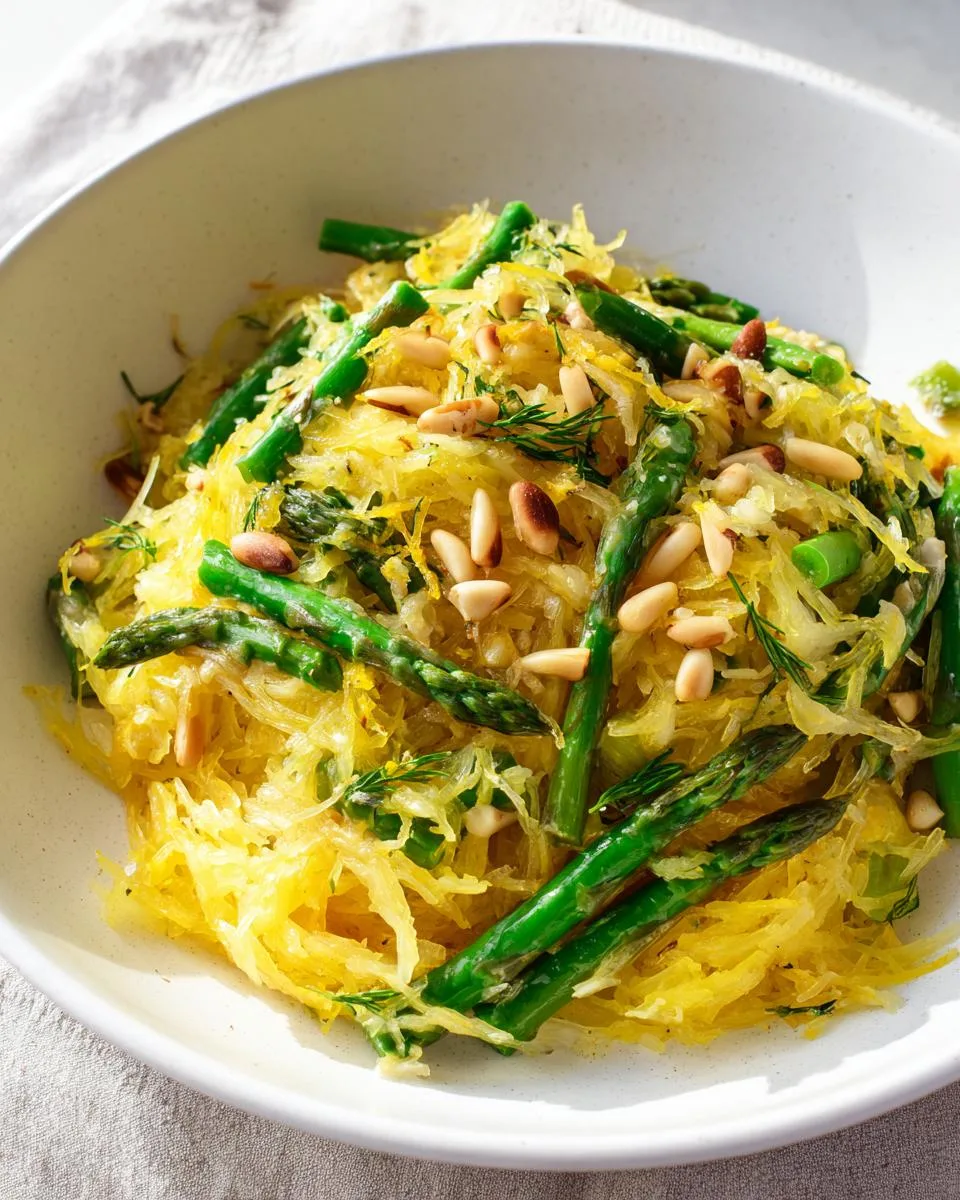
The beauty of this spaghetti squash dish is how forgiving it is – as long as you keep that balance of creamy, fresh, and crunchy elements, you really can’t go wrong. My motto? Use what you love and what’s fresh, and it’ll turn out delicious every time!
Serving Suggestions for Spaghetti Squash With Asparagus Ricotta Lemon And Thyme
Now that you’ve made this gorgeous dish, let’s talk about how to serve it up right! Over the years, I’ve found some perfect pairings that complement these flavors beautifully. Here’s how I like to round out the meal:
- Crusty bread is a must – A warm baguette or some garlic-rubbed toast points are perfect for scooping up every last bit of that creamy ricotta mixture. My grandkids fight over who gets to wipe the bowl clean!
- Keep salads simple and crisp – A light arugula salad with shaved Parmesan and a lemon vinaigrette echoes the flavors in the squash. Or go for a classic butter lettuce salad – the delicate leaves won’t overpower the main dish.
- For heartier appetites – Add some grilled chicken breasts or pan-seared salmon fillets on the side. The mild flavors won’t compete, and it makes the meal more substantial.
- Wine pairings – A crisp Pinot Grigio or Sauvignon Blanc complements the lemon beautifully. For something different, try a dry rosé – its berry notes play surprisingly well with the thyme.
- Presentation matters – I love serving this family-style on a big platter, with extra lemon wedges and thyme sprigs for garnish. The colors look stunning against white dishes!
One of my favorite ways to serve this is as part of a spring brunch spread – it’s unexpected but always gets rave reviews. However you choose to serve it, just make sure everyone gets a generous sprinkling of those toasted pine nuts on top – they’re the perfect finishing touch!
Storage and Reheating
Now, let’s talk leftovers – because trust me, you’ll want to save every last bite of this spaghetti squash dish! Here’s how to keep it tasting fresh and delicious:
First, store any leftovers in an airtight container in the fridge. I find glass containers work best – they don’t absorb odors and keep everything nice and fresh. This dish will stay tasty for about 3 days, though in my house it never lasts that long!
When you’re ready to enjoy it again, you’ve got two great reheating options:
- Oven method (my favorite!): Spread the leftovers in an oven-safe dish, cover with foil, and warm at 325°F for about 15 minutes. This keeps the texture perfect – no sogginess! If it seems dry, sprinkle a teaspoon of water over top before covering.
- Microwave method (for when you’re in a hurry): Transfer a portion to a microwave-safe dish, cover loosely, and heat in 30-second bursts, stirring between each. Usually takes about 1-1.5 minutes total. The pine nuts might lose some crunch, so I like to add a fresh sprinkle after reheating.
A little tip from experience – if you know you’ll have leftovers, consider setting aside some extra toasted pine nuts before serving. That way you can add them fresh when reheating for maximum crunch factor!
One last thing – while you can freeze this dish, I don’t recommend it. The squash tends to get watery when thawed, and the asparagus loses its lovely texture. This one’s best enjoyed fresh or refrigerated for a few days.
Nutritional Information for Spaghetti Squash With Asparagus Ricotta Lemon And Thyme
Now, I’m no nutritionist, but after years of making this dish and feeding it to my health-conscious grandkids, I can tell you it’s one of those meals that makes you feel good after eating it. Here’s the breakdown per serving (that’s about a generous 1 1/2 cup portion – enough to satisfy but not stuff you):
- 210 calories – Light enough for a satisfying lunch but hearty enough for dinner
- 12g fat (4g saturated, 6g unsaturated) – Mostly from the good-for-you olive oil, ricotta, and pine nuts
- 18g carbohydrates – With 5g of fiber from all those wonderful veggies
- 9g protein – Thanks to the ricotta and pine nuts giving it a nice protein punch
- Only 320mg sodium – And you can reduce that by using low-sodium ricotta if needed
- 6g natural sugars – Just what comes from the squash and asparagus
Now, let me be honest – these numbers are estimates based on the exact ingredients I use. Your mileage may vary depending on the brand of ricotta or how generous you are with those pine nuts (I won’t judge if you add an extra sprinkle!). But what I love is that this dish gives you a ton of flavor and satisfaction without weighing you down.
It’s packed with vitamin A from the squash, vitamin K from the asparagus, and all sorts of good stuff from the lemon and olive oil. Plus, it’s naturally gluten-free and vegetarian – though as I always say, the most important nutrition fact is that it’s absolutely delicious!
Frequently Asked Questions
Over the years, I’ve gotten so many great questions about this spaghetti squash dish – here are the ones that come up most often, along with my tried-and-true answers:
Can I use dried thyme instead of fresh?
You can, but it won’t be quite the same. If you must, use half the amount of dried thyme (so 1/2 teaspoon) and add it while roasting the veggies so it rehydrates a bit. But really – fresh thyme makes all the difference in this recipe!
What’s the best way to toast pine nuts?
Watch those little guys like a hawk! I toast mine in a dry skillet over medium-low heat, shaking the pan constantly for about 2-3 minutes until they’re golden and smell nutty. Immediately transfer them to a plate to stop the cooking – they burn crazy fast!
Can I prep any parts ahead of time?
Absolutely! You can roast the squash and asparagus up to a day in advance and store them separately in the fridge. The ricotta mixture (without garlic) also keeps well for a day. Just bring everything to room temperature before assembling – the flavors blend better that way.
My squash won’t cut easily – any tips?
Oh honey, I’ve been there! Try microwaving the whole squash for 30 seconds first to soften the skin slightly. Or use a sharp chef’s knife and a steady hand – sometimes giving it a good whack with a mallet on the back of the knife helps get it started.
Can I use frozen asparagus?
Fresh is definitely best here, but in a pinch, thaw frozen asparagus completely and pat it very dry before roasting. You might need an extra minute or two in the oven to get rid of excess moisture.
Rate This Recipe
Well, there you have it – my beloved spaghetti squash with asparagus, ricotta, lemon, and thyme recipe that’s been a family favorite for years! Now I’d love to hear your thoughts. Did those squash strands turn out perfectly? Was the lemon-thyme combo as magical for you as it is for me?
If you tried this dish, would you do me a kindness and leave a star rating below? Just click how many stars you’d give it – be honest now! And if you’ve got a minute, drop a quick comment telling me how it turned out or any clever twists you added. Did your family gobble it up like mine always does? Did you discover any brilliant variations I should try?
Your feedback means the world to this old cook. It’s what keeps me sharing these recipes and swapping kitchen stories. Plus, your notes help other home cooks know what to expect – that’s how we keep the tradition of good food and shared meals alive!
So go ahead – rate, comment, and most importantly, enjoy every bite of this springtime delight. Happy cooking, my friends!
For More recipes, Follow me on Facebook!